From Sketch to Parametric: Lawlor Family's MatrixGold Journey
A third-generation jeweler's move from hand sketches to parametric CAD. See how MatrixGold transformed custom design, production, and client presentations at a family-run jewelry shop

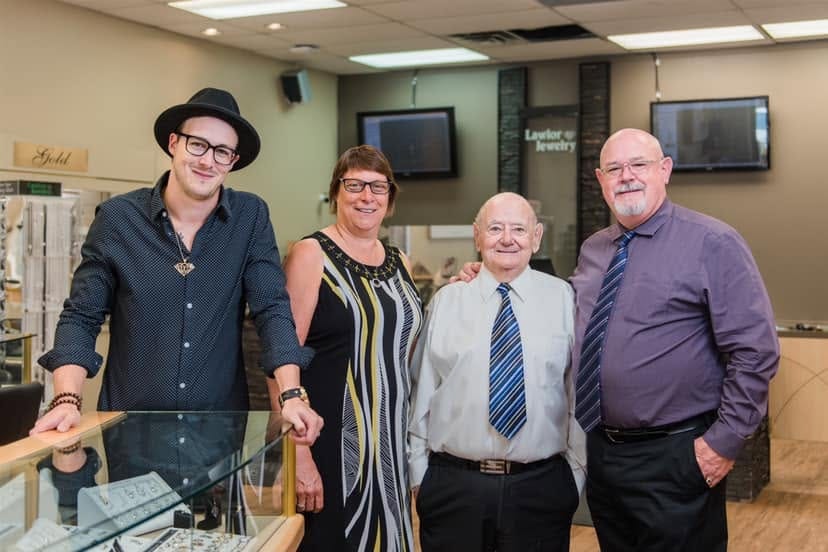
The Lawlor family has been in the jewelry trade for more than 30 years. It started with Mike's grandparents, who ran a shop in the Vancouver area, and continued with his parents, Gordon and Sharon, who founded the family's current store in Stettler, Alberta. Today, Mike and his wife, Alexis, run the Lawlor Jewelry business — three generations deep, with over 15 years of combined industry experience between them: 13 spent designing, and the last six spent bringing manufacturing fully in-house.
Mike's father built custom pieces the way most jewelers of his era did — sketching by hand and sending the work out to service bureaus for wax carving, milling, or 3D printing. Mike never had that drawing hand. What he had instead was an affinity for computers, and a hunch that digital tools were where the trade was heading. That hunch led him to a partnership with GV Canada, and from there, into a CAD education that would eventually reshape how his family's store designs, builds, and sells jewelry.
His path through the software wasn't a straight line to MatrixGold — it was a progression, each stage building the instincts for the next:
• DigitalGoldsmith and CounterSketch gave him his first taste of digital customer presentations and interactive ring customization.
• Matrix v7 through Matrix v9 brought him into full 3D CAD modeling, where he learned to design complex settings and custom pieces.
• MatrixGold marked the shift to a fully parametric platform — one built for rapid modification and automated tolerance management.
Each transition asked something different of him. New habits to build, casting tolerances to relearn, and a constant translation exercise between what looked right on screen and what would actually hold a diamond at the bench.
Upgrading from Matrix v9 to MatrixGold: The Parametric Advantage
The move from Matrix v9 to MatrixGold wasn't an easy one. It meant learning a new interface logic and a new way of thinking about design itself. In Matrix v9, changing a finished piece — a finger size, a center stone cut, a prong thickness — often meant unwinding history steps or rebuilding the model from scratch. It worked, but it was slow, and it punished any late-stage change.
MatrixGold changed that equation. Its parametric history tree means that when one detail changes, everything connected to it updates automatically. A resize is no longer a rebuild — it's an adjustment. That single shift is what turned MatrixGold from an unfamiliar tool into the backbone of how Mike's shop operates today.
Business Metrics Impacted by Parametric Workflows
The payoff showed up directly in the business:
• Higher conversion rates Being able to adjust a design live, in front of a client, removed the multi-day delay that used to follow even simple revision requests — and closed more sales because of it.
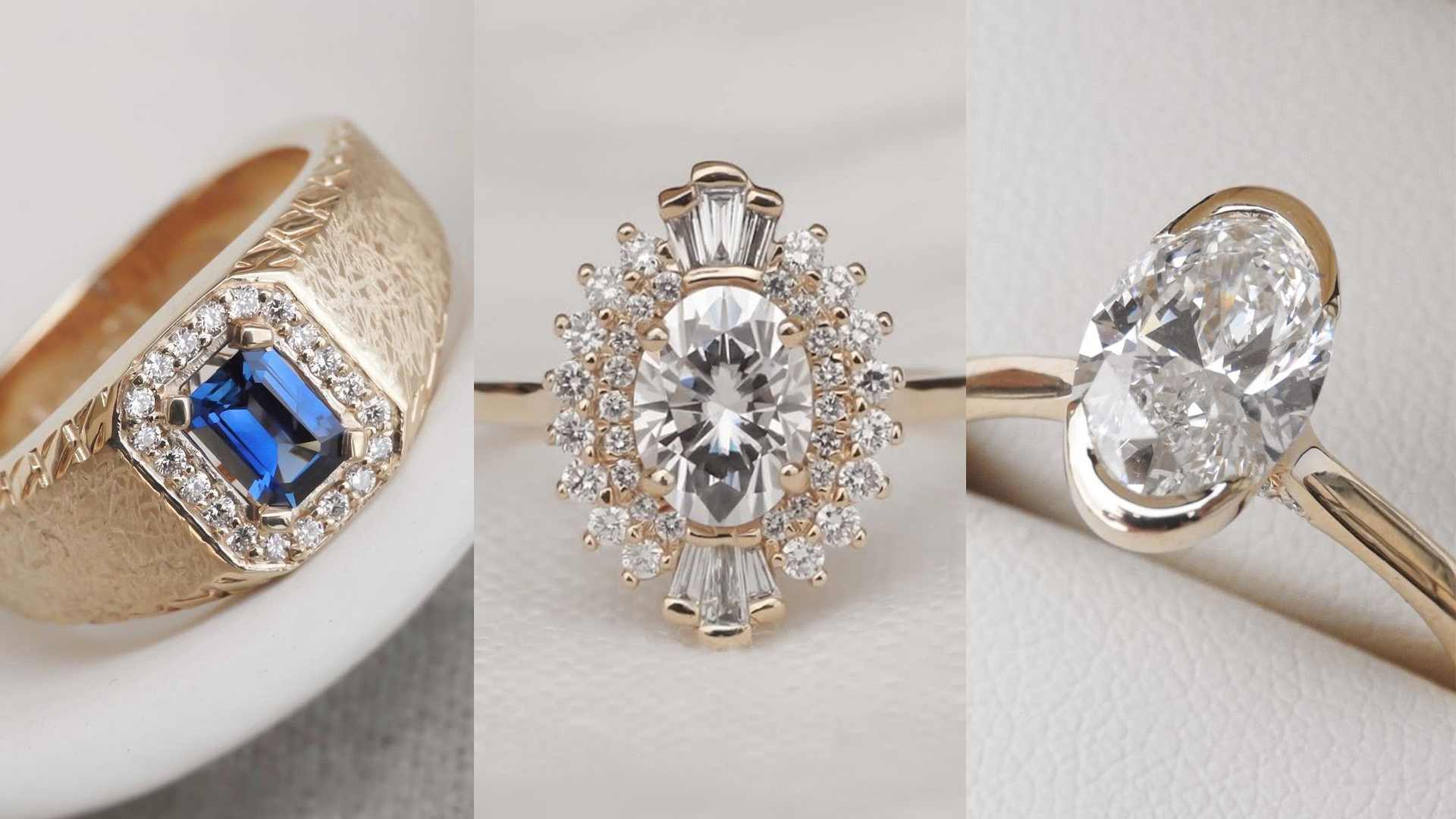
• Collection scaling. A single solitaire base became a master template. Change the center stone dimensions, add a halo, swap the band texture, and a dozen variations grow out of one starting design instead of a dozen separate builds.
• Production consistency. Shop-specific defaults for prong cutters, channel settings, and metal shrinkage tolerances apply automatically, so what comes out of casting matches what was designed — every time, regardless of who built the file.
Optimizing Manufacturing: Custom Tolerances, 3D Textures, and In-House Production
Bringing manufacturing in-house — 3D printing, lost-wax casting, stone setting, hand finishing — raised the stakes on precision. Every tolerance built into a digital file now had to survive the trip from screen to bench without a human catching the gap in between. MatrixGold's preset libraries became the way Mike closed that gap, letting him encode his shop's own standards directly into the software.
Preset Cutters and Custom Setting Tolerances
Rather than adjusting seat depths and prong angles from scratch on every project, Mike built standardized defaults for his prong cutters, channel cutters, and drill holes — each one accounting for metal contraction during casting and the exact seat a given stone needs for a secure setting. The result: fewer manual corrections, and far less room for the kind of small human error that's inevitable after a long day at the bench.
Advanced 3D Texturing for Direct 3D Printing
MatrixGold's texture tools let Mike apply organic finishes — bark, hammered surfaces, and similar effects — directly onto complex 3D geometry. On curved shanks, that's texture no hand-engraving tool could reach. What starts as a digital surface pattern prints in high resolution and carries straight through into investment casting, preserving detail that would be nearly impossible to hand-carve into the same space.
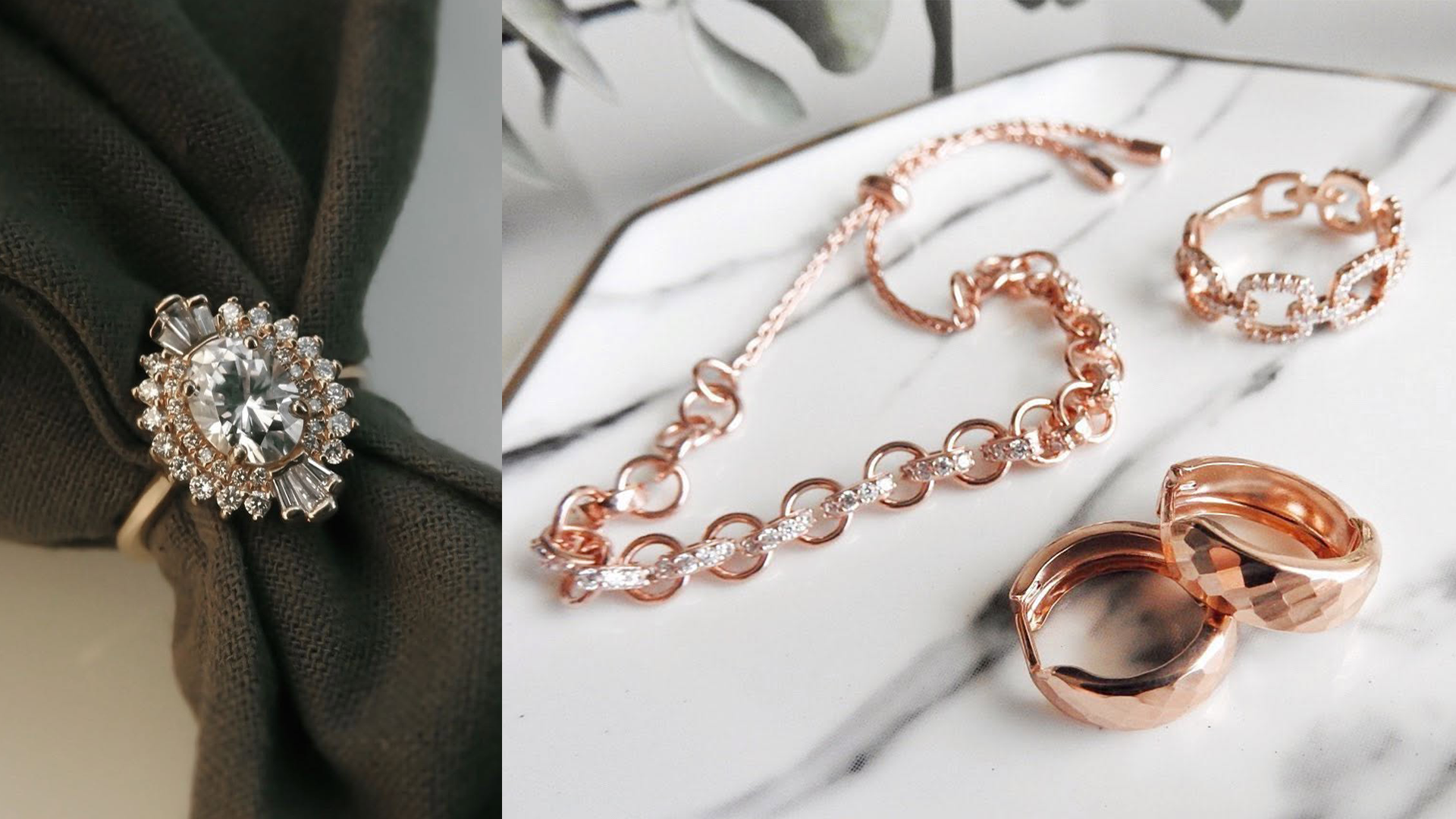
Interactive Client Presentations and Real-Time Rendering
Fifteen years ago, rendering was a back-office chore — 20 minutes or more just to produce a single static image. Today, MatrixGold renders in real time, with no lag, letting Mike rotate, zoom, and modify a model on screen while a client watches.
That change did more than save time. It moved CAD out of the back office and onto the sales floor. A client can now see a design evolve in the room with them, or review a high-resolution link remotely before signing off — turning what used to be a purely technical process into an active part of the sales conversation.
The Return to Custom Makers: Combining Tradition with Technology
Mike sees his own story as part of a larger shift in the industry. His father's generation ran a store the way most jewelry stores ran: buy inventory, fill the showcases, sell what's there. Increasingly, Mike's customers want something different — a maker, not a display case. Someone who will design, cast, and set the piece themselves, rather than asking a client to settle for whatever's closest to what they actually wanted.
Combining the goldsmithing heritage his family built the business on with MatrixGold's design tools, resin 3D printing, and local casting is how Mike meets that demand — without outsourcing production, and without asking a customer to compromise on the ring they came in for.